
Finding Marshfield Residents by Source
No single roll proves every household in Marshfield. The right source depends on the question. Ownership and parcel questions begin with the Assessors. Dated civic lists belong to the Town Clerk, and title questions go to the Plymouth County Registry of Deeds. For households of the past, the State Library collections and local repositories often beat any current database. Each record captures a different relationship. An owner, a voter, a deed party, and a residents directory entry are never the same fact.
Begin narrow, then add a second identifier. An exact street number, parcel key, or directory year separates people with similar names. Marshfield's coastal village labels help as search hints. Still, they cannot replace a situs address or a dated municipal record in any resident lookup.
- Search the Marshfield assessor record by address, street, parcel, or owner name and save the assessment year.
- Use the parcel’s sale or book-and-page lead in the Plymouth Registry index before making a title claim.
- For a dated civic question, ask the Town Clerk for the relevant public street list, annual census material, or voter-file portion.
- For a past household, identify the directory year and section before comparing it with a deed, map, or cemetery source.
- Send a focused public-records request when the verified online route does not expose the record needed.
Note: Treat a search result as a dated lead until an independent record confirms the same person, place, and time.
Marshfield Residents Record Custodians
Town Hall anchors most Marshfield resident records. The Clerk holds civic material, the assessor keeps property cards, and the public-request route runs through the building. County land and court records sit in Plymouth, not in a Marshfield courthouse. That split matters more than it sounds. A parcel card is an assessment record, a registry instrument is the land record, and a court docket proves nothing about residency. Pick the custodian whose record actually answers your question.
Plymouth County Registry of Deeds
50 Obery Street
Plymouth, MA 02360
(508) 830-9200
Marshfield Assessors
870 Moraine Street
Marshfield, MA 02050
(781) 536-2500
Marshfield Town Clerk
870 Moraine Street
Marshfield, MA 02050
(781) 536-2500
For tracing parcels and titles street by street, the Marshfield by-street directory works better than stretching one property result into a household list. Note: Town Hall departments can carry service limits, so confirm the right office before visiting in person.
Marshfield Parcel Search for Residents
Patriot Properties gives Marshfield residents the fastest online route to a parcel. Search it by address, owner name, or parcel ID. Each result row can show parcel ID, location, owner, building type, total value, lot size, beds, baths, finished area, and land-use classification. Neighborhood, sale date, sale price, and book/page round out the record. Those fields tie the lookup to one specific Marshfield parcel, though they do not prove the owner lives there or holds present title.
The assessor allows broader starting points. Start with a surname or a street. From there, narrow by parcel number, neighborhood, or recorded reference, and save the search terms and the date you ran them. A blank result rarely means the parcel is missing. Spelling slips, street-suffix variants, entity owners, and parcel-format quirks can all hide a match.
| Patriot field | Form | How it helps a Marshfield search |
|---|---|---|
| Street name / number | Text | Find parcels on a road, then narrow to one location. |
| Owner | Text | Run a surname or owner search across sortable result pages. |
| Parcel | Text | Open a known municipal parcel route. |
| Neighborhood and LUC | Code / select | Preserve the returned code and description with the result. |
| Sale date, price, book/page | Range / text | Create a lead for a recorded-instrument search. |
The Marshfield Assessors page outlines the office's property cards, maps, and owner or map-and-parcel details.
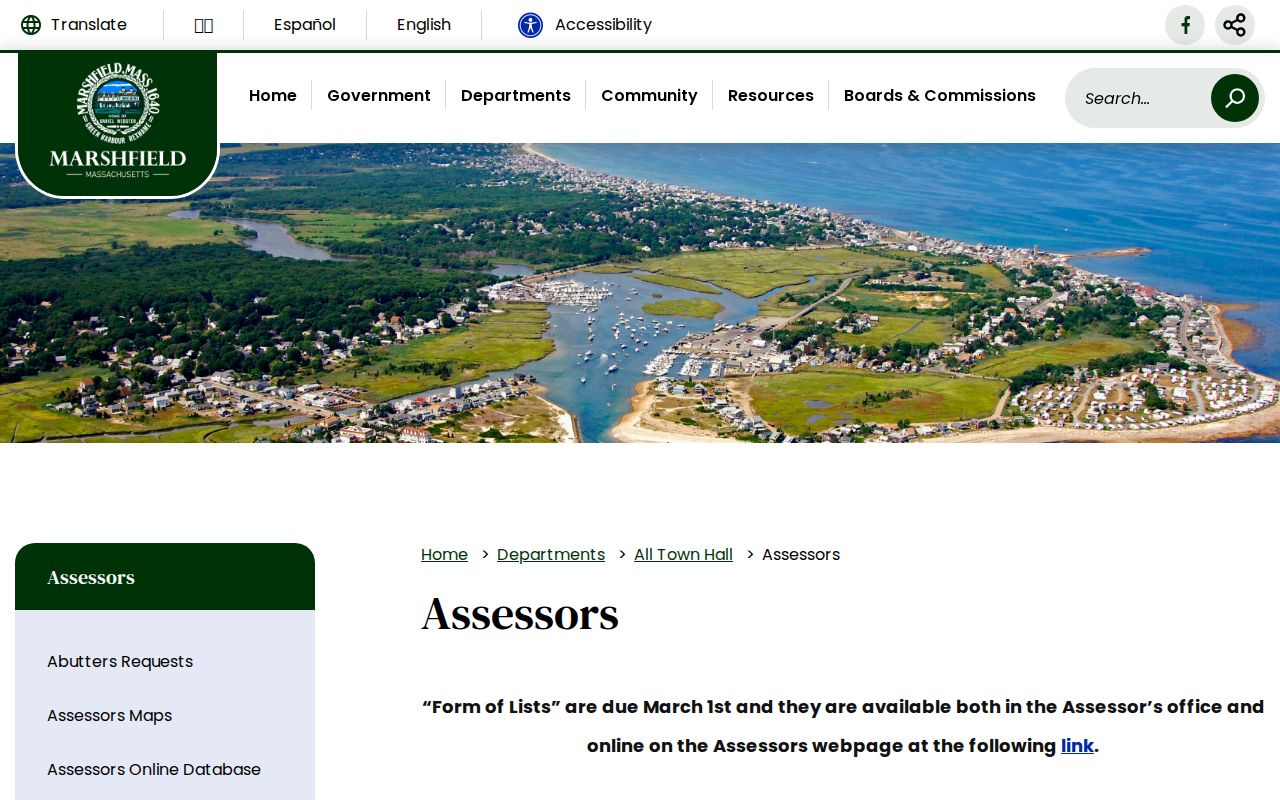
Counter visits still matter for Marshfield parcels.
The office route also suits map context or a precise records request. The live Marshfield assessor search form displays the owner, street, value, and sale-oriented controls used for this kind of directory work.
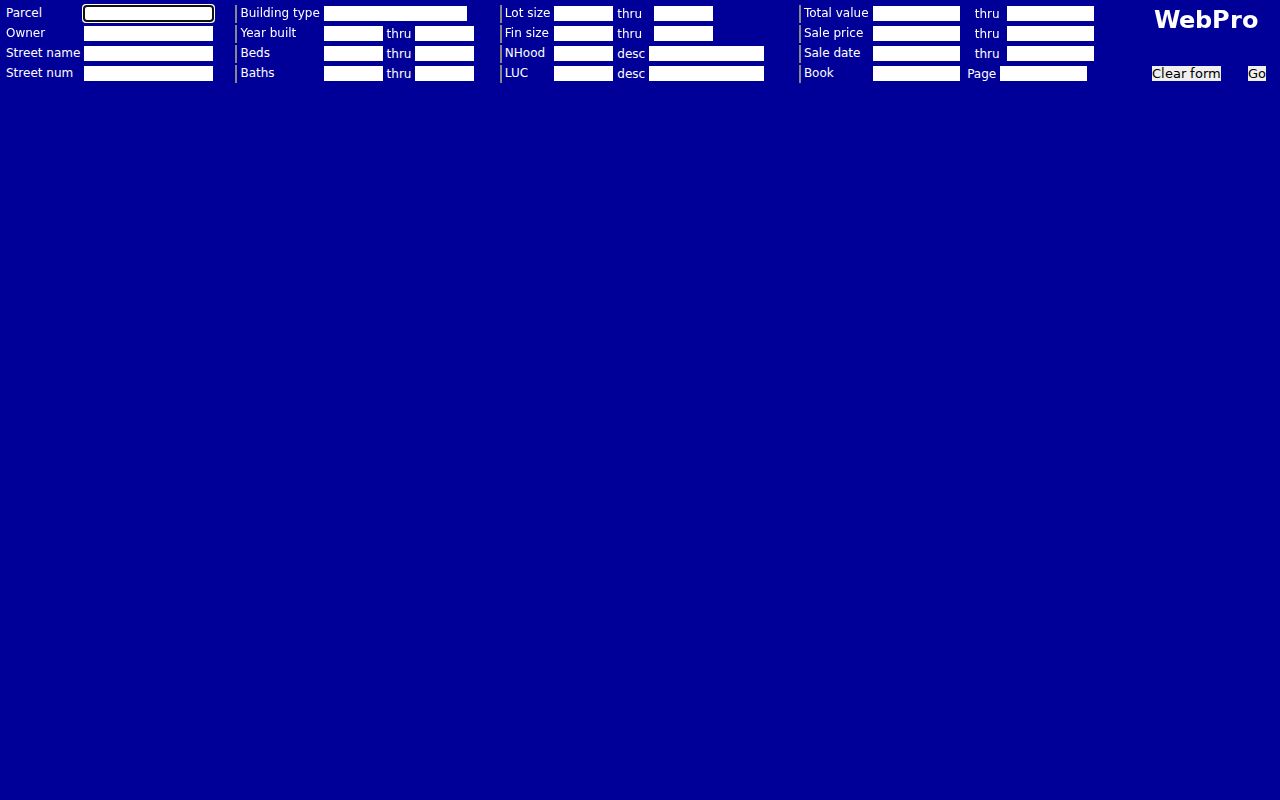
The form works well as a parcel crosswalk. Still, keep its assessment date and address labels attached to any Marshfield residents directory note.
Marshfield Residents: Parcel to Deed
Start with the parcel card in the Marshfield residents directory workflow. A parcel entry often carries a sale date plus a book/page or legal-reference lead. That lead is your bridge to TitleView. Select Marshfield there. Then search by party, date range, document type, or book/page. Registry results list party names and roles, the document type, the town, the recording date, and either a book/page or document number, with an image route when one exists. Always read the instrument itself. Calling a transfer a deed, or summarizing its legal description, invites error.
Historical coverage runs deep, though older material behaves differently. Linked grantor and grantee indexes reach back to August 6, 1686, with back-indexing cautions attached. Books themselves start in 1686. The online indexed workflow picks up around Book 2393, so anything in Books 1 through 2392 demands the unindexed route and printed-index checking. Linked plans begin in 1890. Registered-land records begin in 1899.
- Parcel
- A municipal property key used to reach an assessment card and map context.
- Index
- A finding tool that points to a recorded item; it is not the instrument itself.
- Grantor / grantee
- The transferor and recipient named in a recorded instrument.
- Criss-cross directory
- An address-first directory format; no separate official Marshfield run was located.
Plymouth TitleView provides the free search-and-view path described by the Registry.
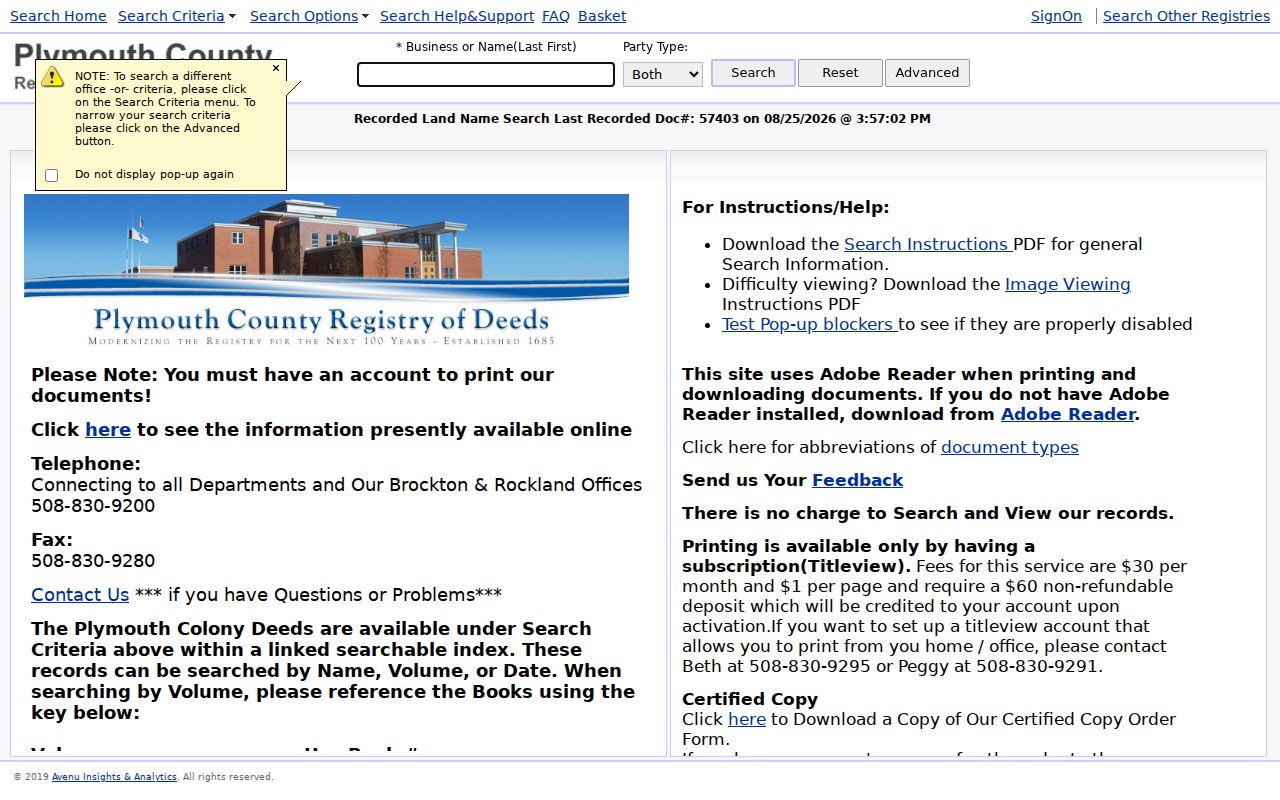
Viewing a record is not the same as ordering a copy. Search and viewing are free through the portal, but printing and Registry copy orders follow separate terms. The Plymouth County Registry of Deeds home page rounds things out with current notices, research training updates, and indexing details worth a look before any historical Marshfield search.
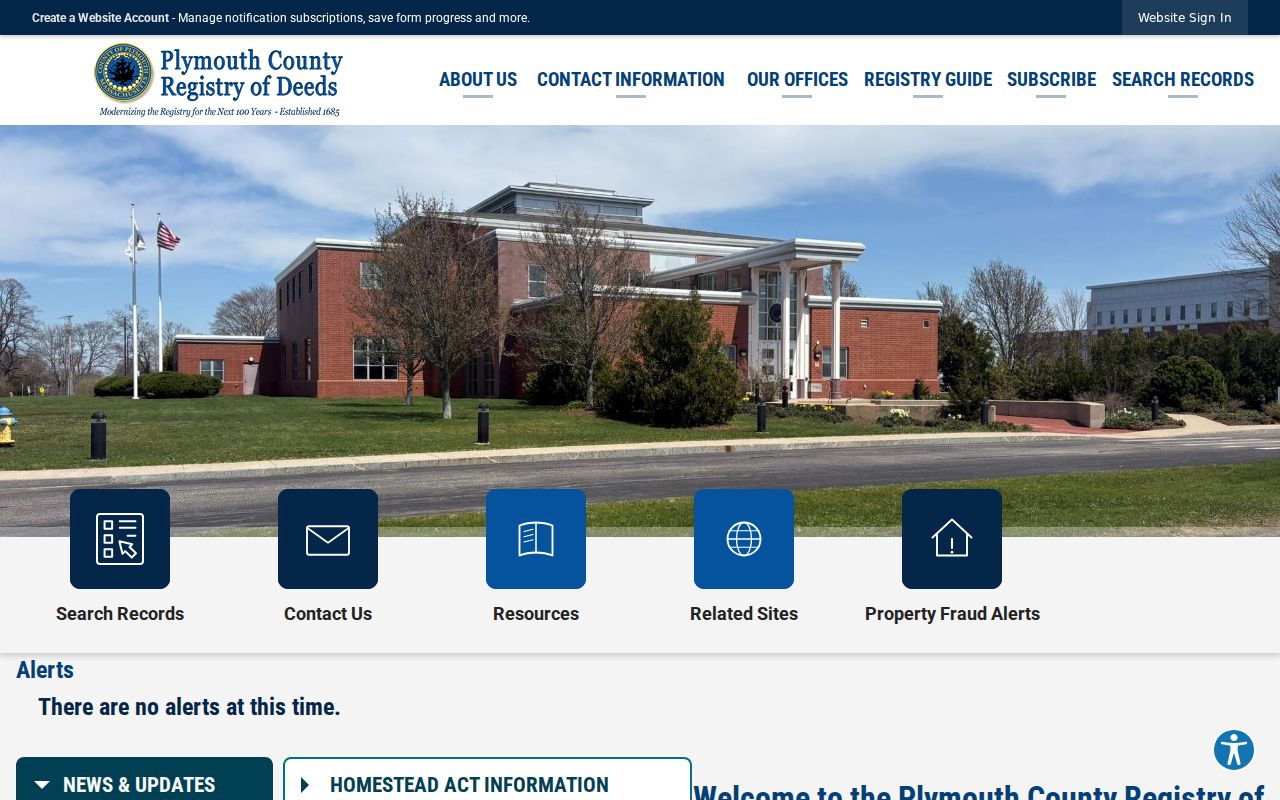
Note: Registry notices can shift search guidance, so record your access date alongside any Marshfield land-record result.
Marshfield Voter Records and Residents
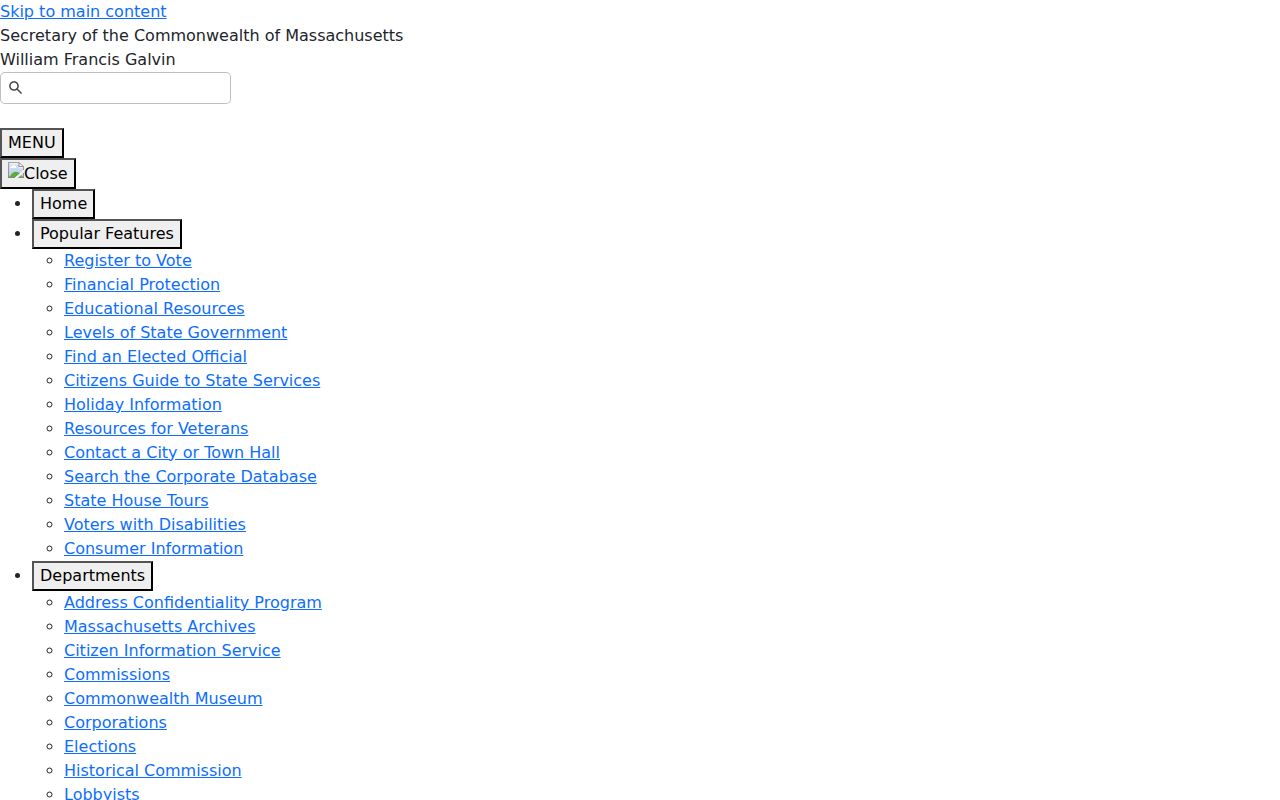
Massachusetts keeps the state voter-status lookup separate from the local public voter list. The state service takes a name, date of birth, and residential ZIP. It returns registration status, polling details, and representative data. That makes it a status tool. It is not a people-search database. A dated Marshfield public voter file comes from the Town Clerk instead. Ask by election or annual-census year, naming the geography, public fields, and format you want.
The permitted local file can be rich. Public fields may cover name, address, party, date of birth, active or inactive status, voter ID, elections voted, prior changes, mailing address, registration date, and inactivity date. Phone, email, veteran status, permanent absentee status, confidential-voter data, and minor information stay withheld. The Clerk also posts resident street listings covering 2016 through 2021. Their fields and currentness call for inspection before use.
The rules settle what is public. Massachusetts voter-information access rules spell out the open and withheld fields. Those fields shape a responsible Marshfield records request.
Treat any dated response as a civic record. It is not proof of a full Marshfield household or a current property relationship.
Marshfield Residents: Courts and Vital Records
Court records start with the right department. Marshfield matters land in Plymouth. Plymouth District Court, Plymouth Probate and Family Court, and Plymouth County Superior Court all sit there, and MassCourts is the online entry point. Search by court, case number, or case type. Civil names and ticket or citation numbers also work. A result can show party, case number, court, docket or event data, disposition, and links, yet it proves no current residence on its own.
Vital records follow a different path, with the Marshfield Town Clerk handling local routes. Statewide custody and certified copies belong to the state Registry of Vital Records and Statistics. No public online index lets you browse these records. Under chapter 46, birth and marriage records open after 90 years and death records after 50. Current restrictions matter. Identity requirements and the preferred copy route matter too.
MassCourts Case Access is the public trial-court entry point for the county departments serving Marshfield.
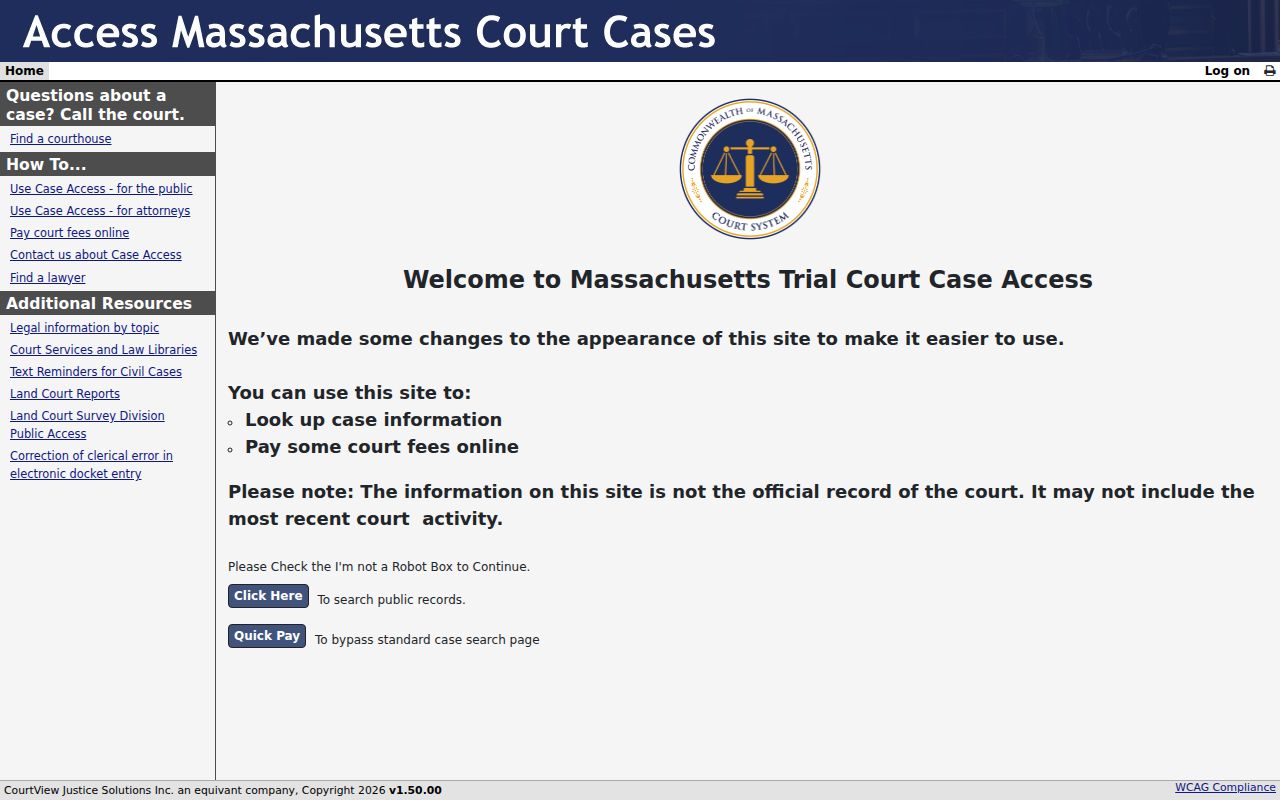
The court posts its own warning. Online case data may not be official or current, so keep the case number, department, role, and date together. Massachusetts vital-record ordering covers online, mail, and in-person routes.
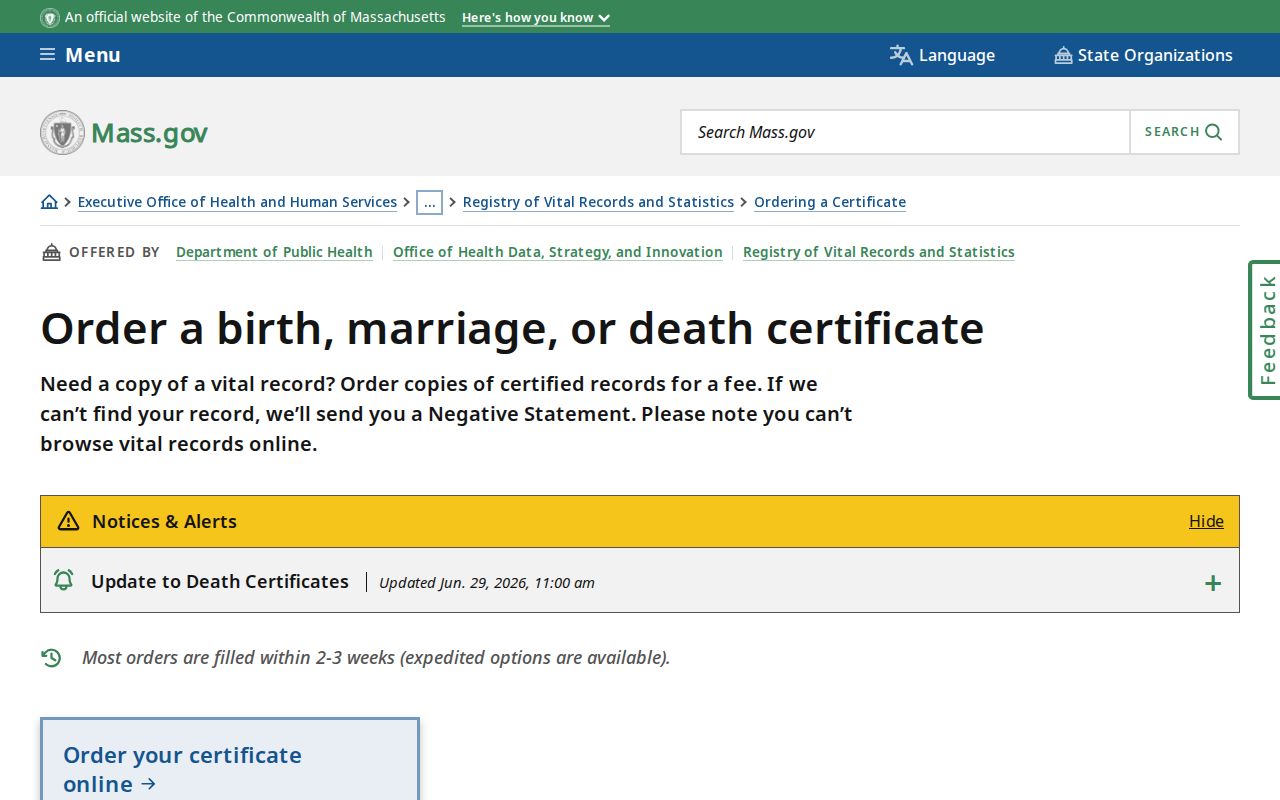
A genealogical lead is not a certified copy. Neither is it the original record, and each form carries its own access rules and deserves a separate label. Note: A court party or vital-record reference is not enough to identify a present Marshfield resident without independent, dated support.
Current Marshfield Resident Directories
Directory-style sources in Marshfield are source-specific. Each answers a different question. The assessor ties an assessment relationship to a parcel. The Registry names recorded parties. A public local voter file is a dated civic record subject to withholding rules. Town Clerk street-list links show a local compilation exists for 2016 through 2021, but the files need inspection before their names or fields can be characterized. Treat staff, association, and organization pages as their own record classes, not a town-wide roll.
| Marshfield source | What it can show | Custodian | Access route |
|---|---|---|---|
| Assessment card | Owner, parcel, situs, mailing, value, and sale lead | Assessors | Patriot portal or counter |
| Recorded-land index | Parties, document, date, and book/page lead | Plymouth Registry | TitleView or Registry route |
| Local voter file | Allowed dated registration fields | Town Clerk | Targeted local request |
| Resident street-list link | Town-maintained listing, fields not yet verified | Town Clerk | 2016–2021 linked files / request |
| Building file | Permit, inspection, certificate, or enforcement records | Building Department | Portal route or precise request |
Official records carry more weight than any commercial people-finder entry. They name a custodian, field, date, and access route. The price is narrowness. An assessor card is not a household roll. An online court result is not a certified copy. That tradeoff favors checking the original record over trusting a broad, unattributed compilation. The Marshfield Town Clerk page links local elections, census material, vital-record routes, documents, and resident street-list references.
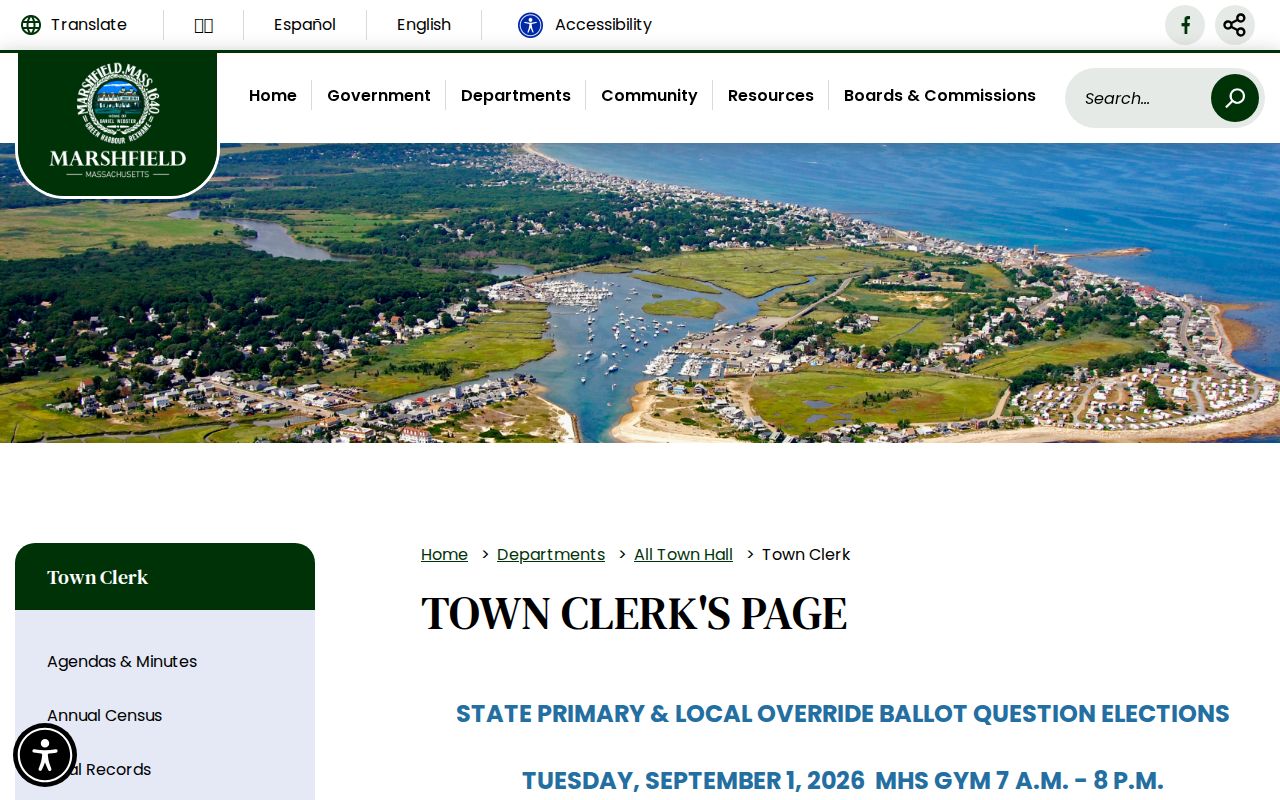
The Clerk route shines for questions tied to a defined year. When a Marshfield resident lookup needs a local public-file request rather than a live portal result, it is the better path.
Marshfield ZIPs in Resident Searches
Official Massachusetts program tables list six ZIP codes for Marshfield: 02020, 02041, 02050, 02051, 02059, and 02065. Treat them as filters. They do not prove a municipal boundary. The village names matter locally. Brant Rock, Green Harbor, Marshfield Hills, North Marshfield, and Ocean Bluff all carry meaning. An individual address still needs USPS delivery confirmation, the assessor situs, and the recorded deed where land status matters.
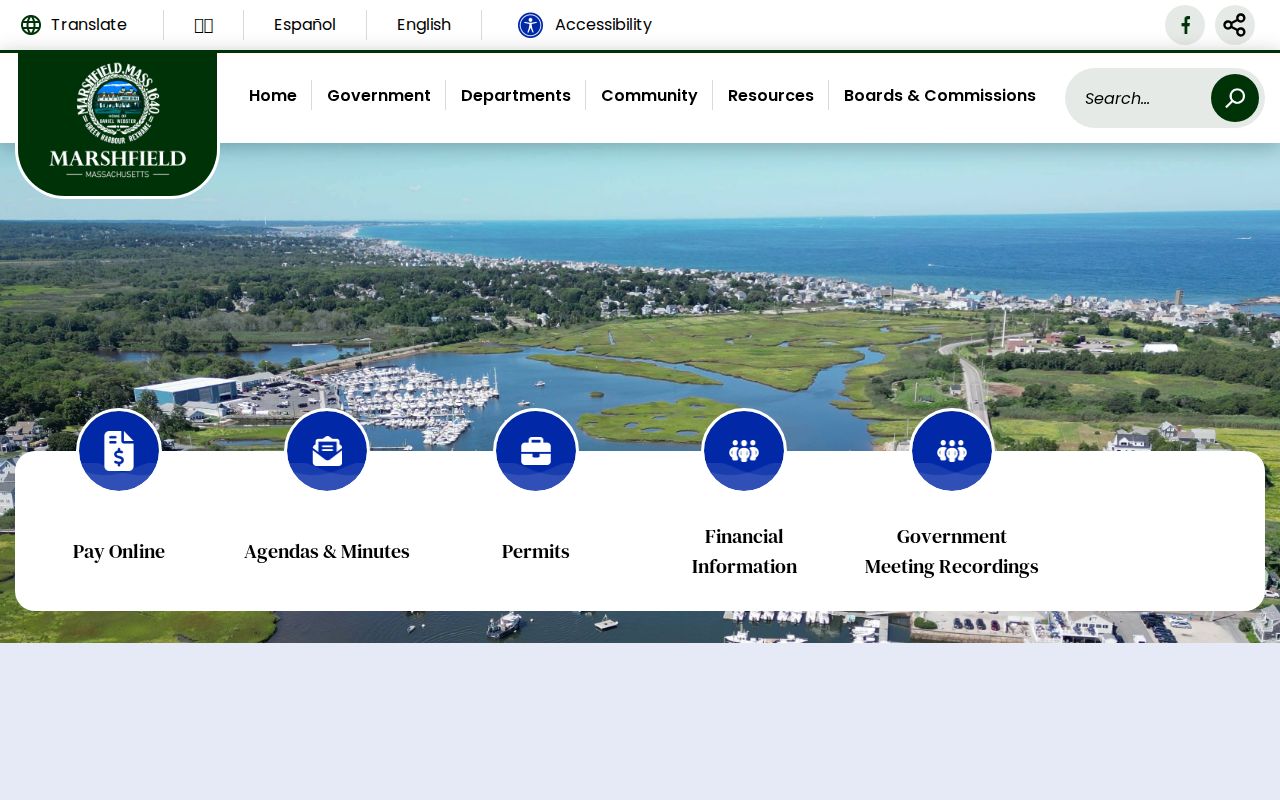
Green Harbor is the clearest caution. Its place name also reaches neighboring Duxbury. A postal city can differ from a town, a neighborhood, or a property situs, so keep ZIP, delivery city, municipality, neighborhood, and situs separate in any Marshfield ZIP code directory search. The Town of Marshfield municipal home page provides the department and public-service routes behind those local geographic labels.
Pair municipal tools with postal tools. A coastal label is not an address claim. Note: The official tables list no current Marshfield ZIP split or realignment, so recheck USPS for future changes.
Marshfield Resident Privacy Boundaries
Public access has limits. The Massachusetts Address Confidentiality Program lets participants use a substitute address, and confidential voter registration can suppress ordinary voter-file details. Court records may be restricted. Vital records carry their own thresholds. A public field in one record never authorizes rebuilding a protected address from another, so treat each protection as its own boundary. If a field is withheld, leave it withheld and ask the custodian whether a segregable redacted response is available.
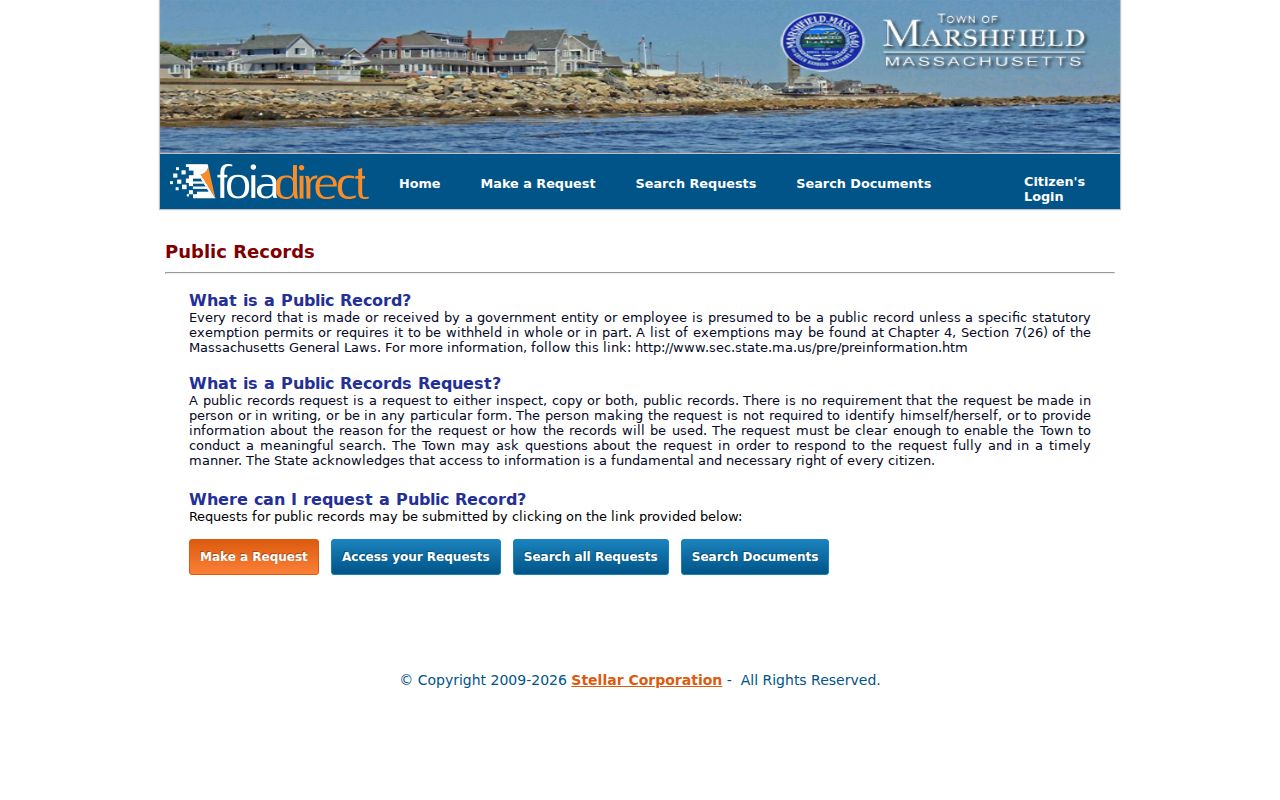
For a Marshfield municipal record that is not online, send a focused request through FOIA Direct, the office, or the Records Access Officer. Massachusetts public-records rules allow 10 business days. The first four hours of staff time are free. Ask for a fee estimate first. After that, personnel time may reach $25 per hour, and copies may cost up to 5 cents per page. Spell out the department, series, date range, address or parcel, public portion, and preferred format.
Marshfield FOIA Direct includes request, request-search, and document-search routes.
A precise request works better than a broad request for names. Ask for a parcel card, a permit file, one street-list year, or a single GIS layer rather than a directory-wide sweep.
Marshfield Historical Resident Directories
The shelf here is defined, not continuous. Historical Marshfield research relies on specific volumes at the State Library, which lists city-directory holdings for 1894, 1915, 1918, and 1926. The 1918 and 1926 volumes are combined Scituate-and-Marshfield directories. Harold Howard compiled both. Their sections can distinguish inhabitants, streets, businesses, officials, churches, schools, societies, associations, and summer residents, yet a historical listing proves only what that edition printed for that date and section.
The Ventress Memorial Library's Historical Room adds local books, cemetery plot lists, town census and residential lists, town reports, limited vital material, and photographs. Appointments are encouraged, and use is free. Staff research is limited by time and scope, and the Historical Society operates a separate catalog with its own appointment-based research.
Reading an entry takes care. The full shelf, entry-reading guidance, and the documented reverse-directory gap belong in the Marshfield city directories collection.
Note: Marshfield publishes no separate official reverse-directory run and no complete official obituary index.
Marshfield Records at the Ventress Building
Marshfield's records landscape has an unusual civic-memory layer. The Ventress Building went up in 1895. It served over the years as town hall, library, high school, and jail. That later library connection helps explain why local history, town reports, cemetery listings, family papers, and historical directories sit beside municipal and county records without becoming the same type of evidence. The 1918 and 1926 volumes work the same way. They gather people, streets, institutions, and summer residents together, but each section keeps its own distinct meaning.
That local context helps with a family-history question or an old street name. It is not a shortcut to a present household. Cite as you go. Preserve the repository, collection title, volume or sheet, compiler, publication date, page, indexing note, and reproduction rule with every historical Marshfield result.
Marshfield Resident Results Need Dates
Date every Marshfield result. Label its source as well. Assessment data can reflect the January 1 tax owner even after a later transfer. A voter file is a dated snapshot. A court docket may sit incomplete online, and a directory may mark only a seasonal or historical presence. The Registry has flagged new Massachusetts deed-indexing standards and research updates, while state vital-record guidance has shifted with recent access rules and archival transfers. Undated results turn misleading fast.
Keep the original query, the URL, the visible fields, the record date, the access date, the source custodian, and any redaction or coverage limitation. Old name searches fail for ordinary reasons. When one fails, write down the spelling you tried. Then try initials, a married name, a trust or entity, a book-and-page lead, or the right unindexed-book route. That disciplined trail keeps a Marshfield residents directory search honest, never claiming more than the underlying source establishes.